
What Is ESG Reporting and Why It Matters in 2025?
ESG reporting is no longer a “nice-to-have”. In 2025 it is the language investors, regulators and customers use to judge whether a company is future-proof. ESG reporting means disclosing material data on Environmental, Social and Governance performance in a structured, comparable way. In short: it makes your impact visible and credible.

Understanding ESG Reporting
At its core, ESG reporting answers three questions:
1. How does your business affect the planet and society?
2. Which risks and opportunities emerge from those impacts?
3. What are you doing about them?
A good report blends quantitative metrics (e.g., Scope 1-3 emissions) with narrative explanations of strategy, policies and governance.
Key ESG Frameworks You Should Know
Global standards are converging fast. Today five frameworks shape most corporate reports:
» SBTi – sets 1.5 °C-aligned emissions targets and shows investors you are serious about net-zero.
» ESRS – the mandatory European Sustainability Reporting Standards under CSRD from FY 2024.
Why ESG Reporting Is Important for Business Value
Access to capital. 71 % of deal-makers say ESG due diligence has become more important in the last 18 months.
Revenue growth. One in three global CEOs already links climate-friendly investment to higher sales.
Operational resilience. Companies with robust ESG data spot efficiency gains and hidden risks earlier than peers.
Brand trust. Transparent disclosure fosters credibility with customers, employees and regulators alike.
The Regulatory Landscape in Europe (2024-2026)
The EU is moving disclosure from voluntary to mandatory:
FY 2024 – Large listed companies begin reporting under CSRD & ESRS.
FY 2025-26 – Scope expands to non-listed and some non-EU firms with >€150 m turnover.
Assurance – Limited assurance becomes compulsory, moving toward reasonable assurance later.
Ignoring these deadlines risks fines, investor flight and reputational damage.
How to Start Your ESG Journey – Practical Steps
1. Map material issues. Run a double-materiality assessment to see what truly matters to your business and stakeholders.
2. Measure your baseline. Use the free » Carbon Footprint Calculator to quantify Scope 1-3 emissions and identify hotspots.
3. Set science-based targets. Align with SBTi pathways where relevant.
4. Choose the right standard mix. Most EU firms will combine ESRS for compliance with GRI for broader transparency.
5. Automate data collection. The Hub’s » ESG Reporting Tool lets you track KPIs, flag data gaps and export investor-ready tables.
6. Secure assurance early. Engage auditors or accredited verifiers before publishing.
7. Communicate and improve. Reporting is a cycle, not a one-off PDF.
OUR SERVICE OFFERINGS
Carbon Accounting and ESG Reporting Services
Carbon Footprint Assessment
Accurately measure and analyze your organization’s carbon emissions to identify reduction opportunities and improve sustainability.
Sustainability Strategy Development
Craft a robust sustainability strategy that aligns with your business goals and regulatory requirements, driving long-term value.
Ways to Achieve Carbon Neutrality with Zero Emissions Hub
Our team is ready to assist you with tailored solutions to meet your sustainability goals.
Product Carbon Footprint Calculation

CBAM Reporting Carbon Emissions

ESG Report Preparation and Presentation

Get in Touch with Zero Emissions Hub
Reach out to us for expert guidance on carbon accounting and ESG reporting. Our team is ready to assist you with tailored solutions to meet your sustainability goals.
Phone
(359) 889-537-131
contact@zeroemissionshub.com
Address
Mladost 1A, 9 Anna Ahmatova Str., Sofia, 1000
Contact Form
Offices
Sofia
Mladost 1A, 9 Anna Ahmatova Str.
Plovdiv
16 Georgi Valkovich Str.
Varna
90 Tsar Osvoboditel Blvd.
Find More Similar Aricles
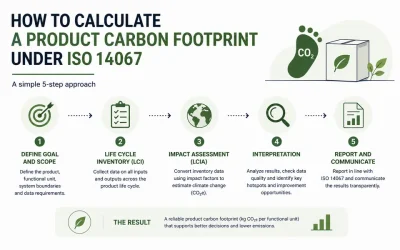
How to Calculate a Product Carbon Footprint under ISO 14067
How to calculate product carbon footprint is a question finance and sustainability teams increasingly ask together, not separately. A product carbon footprint (PCF) quantifies the greenhouse gas emissions associated with…
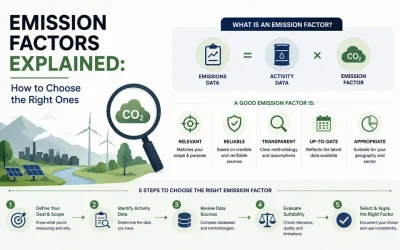
Emission Factors Explained: How to Choose the Right Ones
Emission factors are numerical values that convert a unit of activity data, such as litres of diesel or megawatt-hours of grid electricity, into an estimated quantity of greenhouse gas emissions….
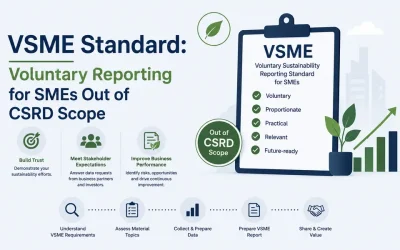
VSME Standard: Voluntary Reporting for SMEs Out of CSRD Scope
VSME standard refers to the Voluntary Sustainability Reporting Standard for SMEs, a proportionate framework companies can use when they fall outside mandatory CSRD scope. Since Directive (EU) 2026/470 narrowed the…
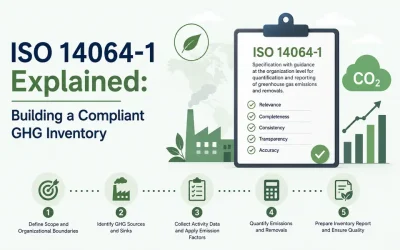
ISO 14064-1 Explained: Building a Compliant GHG Inventory
ISO 14064-1 is an international specification that sets out principles and requirements for quantifying and reporting an organisation’s greenhouse gas emissions and removals. It gives finance, sustainability and compliance teams…
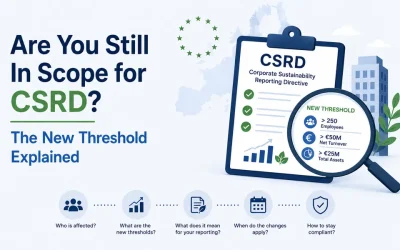
Are You Still In Scope for CSRD? The New Threshold Explained
CSRD scope threshold data requirements have shifted materially since Directive (EU) 2026/470 entered into force, and many finance and sustainability teams are now reassessing whether their company still carries a…
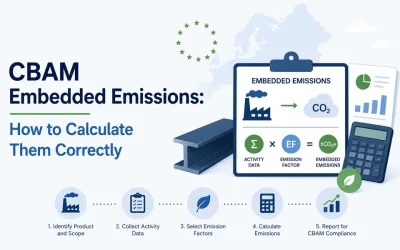
CBAM Embedded Emissions: How to Calculate Them Correctly
CBAM embedded emissions are the greenhouse gas emissions released during the production of goods covered by the EU Carbon Border Adjustment Mechanism. Getting this number right is not a formality….
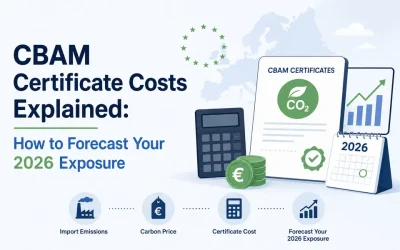
CBAM Certificate Costs Explained: How to Forecast Your 2026 Exposure
CBAM certificate cost is quickly becoming a real budget line, not a theoretical compliance topic. From 2026, importers of iron, steel, aluminium, cement, fertilisers, hydrogen and electricity into the EU must buy certificates matching the embedded emissions in their...
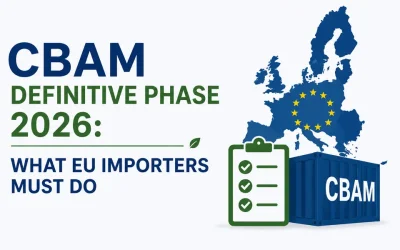
CBAM Definitive Phase 2026: What EU Importers Must Do Now
CBAM definitive phase 2026 marks the point where reporting obligations turn into financial ones. Until now, importers only had to report embedded emissions data. From 2026, they will need to…

CBAM Registration Declarant EU: How to Become an Authorised CBAM Declarant
For many importers, the big CBAM question is no longer “does this apply to us?” but “how do we actually register as an authorised CBAM declarant in the EU?”This article brings together the key points from Zero Emissions Hub’s CBAM Mechanism for Carbon Border...

How to Calculate Scope 1, 2 and 3 Emissions?
You can’t manage greenhouse gas emissions if you don’t know where they come from. At Zero Emissions Hub, carbon accounting is defined as measuring Scope 1, 2 and 3 emissions and pairing them with action plans for reductions.This article walks through how to calculate...
0 Comments