
ESG vs Sustainability: Understanding the Difference
“Sustainability” speaks to purpose and long-term value. “ESG” turns that intent into decision-useful data for investors, regulators and customers. Knowing the difference helps you communicate clearly, meet reporting rules and prioritise action where it matters.

What “Sustainability” means in business
Sustainability is the broad strategy of creating long-term value while reducing negative impacts on people and the planet. It covers your vision, policies, culture, products and partnerships. Think decarbonisation roadmaps, supplier engagement, circular design and community impact. For a practical, business-oriented view, see your hub page on carbon & sustainability reporting.
What “ESG” means
ESG (Environmental, Social, Governance) is the measurement and disclosure side of sustainability—how you quantify risks, track KPIs and report to markets. It relies on structured frameworks and standards so results are comparable and, increasingly, assured. Your explainer on What Is ESG Reporting outlines the approach and why it matters for investors and regulators.
Frameworks you’ll hear about (quick tour):
- » GRI (stakeholder-focused impact reporting).
- » ISSB (IFRS S1/S2 investor-grade disclosures).
- » ESRS under CSRD (mandatory EU sustainability standards).
ESG vs. Sustainability — key differences at a glance
| Dimension | Sustainability | ESG |
| Purpose | Strategy & impact | Measurement & disclosure |
| Audience | Broad (employees, customers, communities) | Investors, regulators, lenders |
| Scope | Company mission, value chain, products | Material metrics & narrative tied to standards |
| Evidence | Policies, initiatives, outcomes | KPIs, audit trails, assurance |
| Regulation | Voluntary positioning | Increasingly mandatory in EU via CSRD/ESRS; converging globally via ISSB |
How they work together
A simple way to position it: Sustainability is the “why and where”; ESG is the “what and how measured.” You set a sustainability strategy (e.g., reduce lifecycle emissions; improve workforce wellbeing), then use ESG frameworks to collect data, calculate emissions and disclose in line with market rules. Your site connects the dots from strategy to reporting with clear service overviews and tools.
When to use “ESG” vs. “Sustainability”
- Investor decks & regulatory reports: Use ESG. Reference ISSB/GRI and, if you operate in the EU, the ESRS under CSRD.
- Brand, product pages, careers: Use Sustainability. Emphasise strategy, innovation and long-term impact (link to your sustainability/ESG services hub).
- Supplier questionnaires & RFPs: Lead with ESG metrics (Scopes 1–3, energy mix, safety, governance). Point to your reporting explainer for consistency.
Start here: tools & steps to get practical
- Baseline the numbers. Use your tools to map emissions and KPIs (your homepage highlights the » Carbon Footprint Calculator and the » ESG Reporting Tool).
- Choose the right framework(s). Many report using ESRS (compliance) plus GRI (impact depth) and align to ISSB for investors.
- Publish & improve. Your free » ESG Reporting Tool helps structure data and track progress.
How Zero Emissions Hub can help
From scoping material topics to producing an assured, investor-ready report, your pages and services make the pathway concrete—then invite readers to chat with your team to plan the next step. Link your CTA to the consultation/contact page.
OUR SERVICE OFFERINGS
Carbon Accounting and ESG Reporting Services
Carbon Footprint Assessment
Accurately measure and analyze your organization’s carbon emissions to identify reduction opportunities and improve sustainability.
Sustainability Strategy Development
Craft a robust sustainability strategy that aligns with your business goals and regulatory requirements, driving long-term value.
Ways to Achieve Carbon Neutrality with Zero Emissions Hub
Our team is ready to assist you with tailored solutions to meet your sustainability goals.
Product Carbon Footprint Calculation

CBAM Reporting Carbon Emissions

ESG Report Preparation and Presentation

Get in Touch with Zero Emissions Hub
Reach out to us for expert guidance on carbon accounting and ESG reporting. Our team is ready to assist you with tailored solutions to meet your sustainability goals.
Phone
(359) 889-537-131
contact@zeroemissionshub.com
Address
Mladost 1A, 9 Anna Ahmatova Str., Sofia, 1000
Contact Form
Offices
Sofia
Mladost 1A, 9 Anna Ahmatova Str.
Plovdiv
16 Georgi Valkovich Str.
Varna
90 Tsar Osvoboditel Blvd.
Find More Similar Aricles
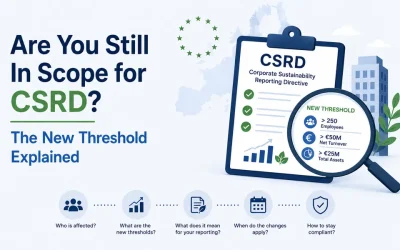
Are You Still In Scope for CSRD? The New Threshold Explained
CSRD scope threshold data requirements have shifted materially since Directive (EU) 2026/470 entered into force, and many finance and sustainability teams are now reassessing whether their company still carries a…

ESG vs. CSR: Differences Between ESG Reporting and Corporate Social Responsibility
CSR and ESG are related but not interchangeable. CSR (Corporate Social Responsibility) describes how a company contributes to society through values-led programs and community impact. ESG translates those intentions into comparable, investor-grade disclosures aligned...

What Is ESG Reporting and Why It Matters in 2025?
ESG reporting is no longer a “nice-to-have”. In 2025 it is the language investors, regulators and customers use to judge whether a company is future-proof. ESG reporting means disclosing material data on Environmental, Social and Governance performance in a...
0 Comments